Ask most people what makes “good” firewood and they’ll mention the type of wood — oak, maple, ash. That matters, but it’s not the most important factor. The single biggest thing separating a wood pile that burns clean and hot from one that smokes, sputters, and struggles to catch is moisture content. That’s the entire difference between seasoned and green firewood, and it’s worth understanding before you buy.
What “Green” Firewood Actually Means
Green firewood is wood that’s been recently cut and split but hasn’t had time to dry out. Freshly cut hardwood can hold 45% or more of its weight in water, most of it trapped inside the cell structure of the wood itself. That moisture has to burn off before the wood can actually combust efficiently, which means a fire built with green wood spends much of its energy evaporating water instead of producing heat.
The practical effects of burning green wood are hard to miss:
- More smoke, since incomplete combustion releases unburned particles into the air
- Difficulty starting and maintaining a fire, especially without a lot of kindling and patience
- Hissing or bubbling sounds from logs as trapped moisture escapes
- Creosote buildup in chimneys and flues, which is a genuine fire hazard over time
- Lower overall heat output, since energy is lost to moisture evaporation rather than warmth
What “Seasoned” Actually Means
Seasoned firewood has been dried — typically for six months to a year, depending on species and storage conditions — until its moisture content drops to somewhere around 20% or lower. At that point, the wood catches faster, burns hotter, produces less smoke, and leaves less residue behind in a chimney or flue.
The tricky part is that “seasoned” isn’t a strictly regulated term, and definitions vary between sellers. Wood that’s been split and stacked outdoors for three months in humid conditions is in a very different place than wood that’s been split, stacked, and covered for a full year. The only reliable way to know for certain is to check moisture content directly with a moisture meter, which reputable firewood suppliers use to verify their wood before it’s sold rather than relying on a rough estimate of how long it’s been sitting.
How to Judge Seasoned Wood Yourself
If you’re buying firewood and want a quick gut check, a few visual and physical cues can help:
- Color. Seasoned wood tends to look grayer and duller than the fresh, pale color of a recent cut.
- Cracks. Radial cracks (splits radiating out from the center of the log) are a common sign of drying.
- Weight. Seasoned wood is noticeably lighter than green wood of the same size, since so much water has left it.
- Sound. Two seasoned pieces knocked together tend to produce a sharper, hollower sound than the dull thud of green wood.
- Bark. Loose or easily peeling bark is often a sign of wood that’s been drying for a while.
Why Our Mixed Hardwood Blend Works Well
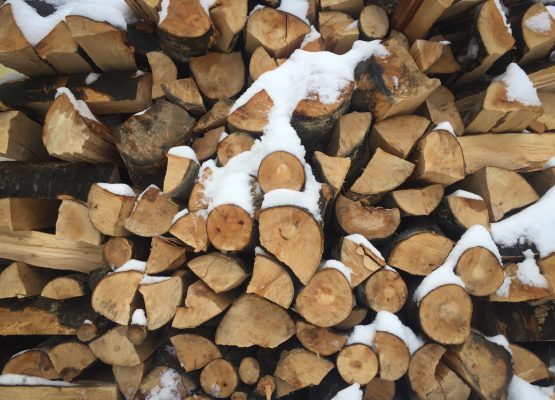
Our Firewood is a mixed hardwood blend of ash, oak, maple, and poplar. Each of these species dries at a slightly different rate — ash, for example, is known for seasoning relatively quickly compared to denser woods like oak — but blending them gives you a wood pile that burns consistently across the mix rather than relying on a single species and its specific drying timeline. For a closer look at why this particular combination works well for most fireplaces and fire pits, see our post on mixed hardwood firewood.
Storage Matters Just as Much as the Wood Itself
Buying properly seasoned firewood is only half the equation — how you store it afterward determines whether it stays that way. Wood left uncovered in a wet spot can reabsorb moisture surprisingly fast, undoing months of seasoning in a matter of weeks. Our guide to firewood storage covers stacking methods and covering techniques that keep delivered wood dry through an entire burning season.
Order With Confidence
When you order from Mulch and More, you’re getting wood sourced and prepared with burn quality in mind, not just cut and shipped. If you have questions about current moisture levels or want help figuring out how much wood you’ll need for the season, contact us or call (610) 644-8086 before you place an order.