When it comes to tree care, one of the simplest and most effective things you can do is apply mulch around your trees. Not only does it give your landscaping a clean, professional look, but it also supports healthier growth and improves soil structure by regulating moisture, protecting roots, and reducing weeds. But mulching around trees isn’t as simple as piling on wood chips and walking away. There’s a right way, and a wrong way, to do it.
In this guide, we’ll walk through everything you need to know about how to mulch around trees, including benefits, best practices, common mistakes, and the best types of mulch to use.
Why Mulching Around Trees Matters
Mulching around trees offers a wide range of benefits—especially for young trees or those planted in exposed, sunny, or compacted areas.
Key benefits of mulch around trees include:
- Moisture retention: Mulch helps the soil retain water, which is especially helpful during dry spells or drought conditions.
- Weed prevention: A thick layer of mulch suppresses weed growth around the base of the tree, reducing competition for nutrients.
- Temperature control: Mulch insulates the soil, keeping roots cooler in the summer and warmer in the winter.
- Root protection: It acts as a cushion against lawnmowers, string trimmers, and foot traffic that could damage delicate root zones.
- Improved soil quality: Organic mulch breaks down over time, enriching the soil with nutrients and promoting better root development.
Simply put, mulch around trees creates a healthier, more stable environment—especially during those critical first few years after planting.
The Right Way to Mulch Around a Tree
Mulching correctly is essential. Many homeowners make the mistake of applying mulch too thickly or too close to the trunk, which can actually harm the tree rather than help it.
Follow these steps to apply mulch around your tree the right way:
- Clear the area around the base. Remove grass, weeds, or old mulch from around the trunk in a 2- to 4-foot diameter circle.
- Water the soil. If the area is dry, give the tree a good soak before applying mulch to lock in moisture.
- Add mulch in a donut shape. Spread mulch 2–4 inches deep in a wide ring, keeping it about 3–6 inches away from the trunk itself. This avoids trunk rot and pest issues.
- Smooth and maintain. Rake the mulch evenly and check every few months to ensure it hasn’t compacted, blown away, or crept up against the trunk.
- Refresh annually. Organic mulch breaks down over time. Add a fresh layer each spring to maintain its effectiveness without over-piling.
What Type of Mulch Is Best for Trees?
When choosing mulch for trees, it’s best to stick with organic options that improve soil quality while delivering moisture control and weed suppression.
Recommended mulch types around trees:
- Shredded hardwood mulch: A long-lasting, natural-looking option that works well in most yards.
- Pine bark mulch: Attractive and aromatic, this mulch also breaks down slowly and enriches soil over time.
- Pine needles: Excellent for acid-loving trees like evergreens, this mulch offers light coverage and excellent airflow.
- Compost mulch: Great for young trees or newly planted saplings, compost feeds the soil and supports root growth.
Avoid using rock or gravel mulch around trees unless you’re working in a dry climate or decorative bed that doesn’t require organic enrichment.
Common Mistakes to Avoid When Mulching Around Trees
While mulching is generally beneficial, improper application can lead to disease, poor growth, or even tree death.
Watch out for these common mistakes:
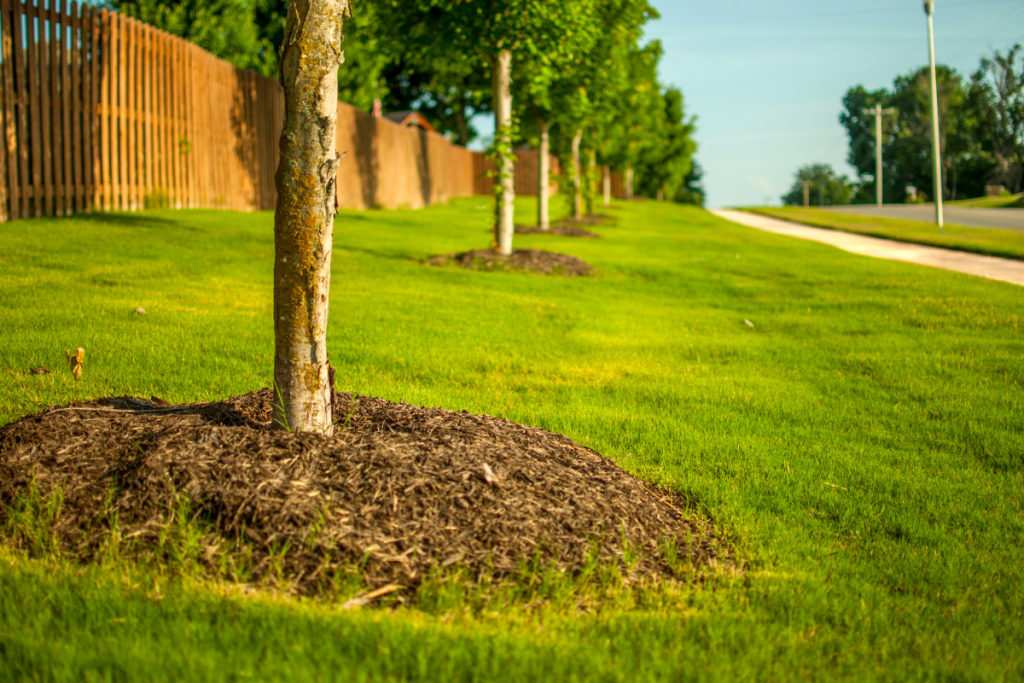
- Volcano mulching: Piling mulch high around the base of a tree may look neat, but it traps moisture against the bark and leads to rot.
- Using too much mulch: More isn’t always better—keep the depth around 2–4 inches. Thick mulch can suffocate roots or harbor pests.
- Letting mulch touch the trunk: Always leave space between the mulch and the tree trunk to prevent fungal growth and rodent damage.
- Skipping maintenance: Mulch decomposes over time, so forgetting to replenish it each year limits its effectiveness.
- Using non-organic mulch: Rubber or dyed mulch can leach chemicals and may not support healthy soil over time.
If you’ve already made one of these mistakes—don’t panic. Simply remove the excess mulch and reapply properly. Trees are resilient and can bounce back with a little attention.
When Should You Mulch Around Trees?
The best time to mulch around trees is in early spring or late fall.
- Spring mulching helps retain soil moisture before summer heat arrives and gives the tree a healthy start for the growing season.
- Fall mulching insulates roots before winter, protects against freeze-thaw cycles, and helps prepare the soil for spring.
In either season, wait until the ground is thawed and the soil is moist before laying down a new layer.
Keep Your Trees Healthy with the Right Mulch
Mulching around trees is one of the easiest and most effective ways to promote long-term health in your landscape. With the right material and proper technique, you can boost root strength, suppress weeds, retain moisture, and protect your trees for years to come.
If you’re not sure which mulch is best or how much you need, Mulch and More can help. We offer a wide variety of high-quality mulch products—available in bulk or by the bag—plus expert guidance on how to use them. Whether you’re planting a new tree or refreshing the look of your yard, we’ll help you get it done right.
Visit us today to explore mulch options or schedule local delivery right to your driveway.
Mulch and More: Your Local Source for Premium Mulch
Looking for high-quality mulch that’s right for your yard? At Mulch and More, we carry a wide variety of mulch options—including bark, compost, straw, rubber, and stone—available for pickup or delivery. Our knowledgeable team can help you choose the best mulch for your specific project, whether you’re improving a vegetable garden, refreshing your flower beds, or building a safe, beautiful play area.
Contact us today to learn more or place your order—and give your landscape the boost it deserves.
FAQ: Common Mulch Use Questions
Frequently Asked Questions About Mulching Around Trees
1. Why should I mulch around my trees?
Mulch helps trees retain moisture, regulate soil temperature, and suppress weeds. It also adds nutrients as it breaks down, creating healthier soil and stronger root systems.
2. How thick should the mulch layer be?
Aim for about 2–3 inches of mulch around trees. Too much can suffocate roots and invite pests, while too little won’t retain enough moisture.
3. How far from the trunk should mulch start?
Keep mulch 3–6 inches away from the base of the tree. Piling mulch directly against the trunk can trap moisture and lead to rot or pest issues.
4. What type of mulch is best for trees?
Organic mulches like shredded hardwood, pine bark, or composted leaves work best. They break down over time, enriching the soil naturally.
5. Should I remove old mulch before adding new mulch?
If the existing mulch layer is compacted or thicker than 3 inches, rake some away before adding more. A light refresh each season is ideal.
6. How often should I replace mulch around trees?
Once or twice a year is plenty—typically in spring and fall. This keeps the layer fresh, prevents compaction, and maintains its protective benefits.
7. Can I use stones or rubber mulch instead?
While decorative, inorganic mulches like stones or rubber don’t provide nutrients or improve soil structure. They can also heat up more in the sun, which may stress roots.
8. What is a “mulch volcano,” and why should I avoid it?
A mulch volcano is when mulch is piled high against a tree trunk. This traps moisture and leads to bark decay, mold, and root rot—all of which can kill your tree.
9. Does mulching attract bugs or pests?
Properly applied mulch shouldn’t cause pest issues. However, over-mulching can create damp conditions that attract insects like termites or ants.