River rock is one of the most versatile landscape materials available — and one of the most underused. Most homeowners think of it as something you see in formal gardens or drainage ditches. In reality, it works across a surprisingly wide range of applications, from backyard water features to front entry borders to problem areas that nothing else seems to solve.
If you’ve got bulk river rock delivered or you’re planning an order, here are eight practical, high-impact ways to put it to work on your property.
1. Dry Creek Bed
This is the most popular river rock landscaping application — and for good reason. A dry creek bed mimics the look of a natural stream channel, uses river rock’s rounded, water-worn appearance to its full advantage, and solves a real drainage problem at the same time.
The concept is straightforward: create a shallow, curved channel through your yard that follows the natural path water takes during heavy rain. Line it with river rock in a mix of sizes — larger stones at the edges, smaller stones in the center to suggest current. Add a few boulders for visual anchoring and some ornamental grasses or ferns along the banks, and what was a muddy drainage problem becomes one of the best-looking features in the yard.
Dry creek beds work particularly well on properties with a natural grade change or areas where runoff concentrates. Browse Mulch & More’s boulder selection for anchor stones to pair with river rock in a creek bed design.
2. Garden Bed Ground Cover
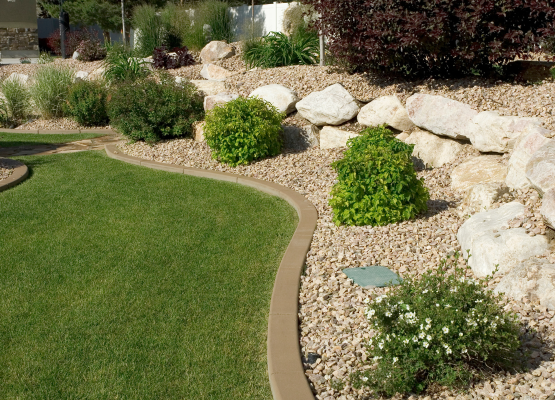
River rock in the 1–3 inch range is an excellent ground cover for garden beds, particularly in foundation plantings, low-water landscape designs, and areas where mulch tends to wash or blow away.
Laid over quality landscape fabric at a 2–3 inch depth, it suppresses weeds, maintains moisture, and requires virtually no maintenance. Unlike mulch, it doesn’t fade, float, or need annual refreshing. For beds with drought-tolerant plants, ornamental grasses, or evergreen shrubs, river rock often makes more long-term sense than organic material.
For a detailed walkthrough of using decorative stone in garden beds, see our post on decorative stone for garden beds.
3. Around the Base of Trees
The area directly around the base of a tree — typically 2 to 3 feet out from the trunk — is one of the most awkward spots to maintain in any yard. Mowing around it is tedious, planting under it can harm the tree’s root system, and bare soil erodes and looks unfinished.
River rock is one of the best solutions. A clean circle of river rock around a tree’s base protects the root zone, eliminates mowing in that spot, and looks intentional. Use a flat landscape edging to create a defined border, keep the stone an inch or two away from the actual trunk to allow airflow, and apply at a 2-inch depth over landscape fabric.
Smaller river rock (3/8″ to 3/4″) works well for tree circles — it’s fine enough to fill the area cleanly without looking too heavy or industrial.
4. Patio and Pathway Border
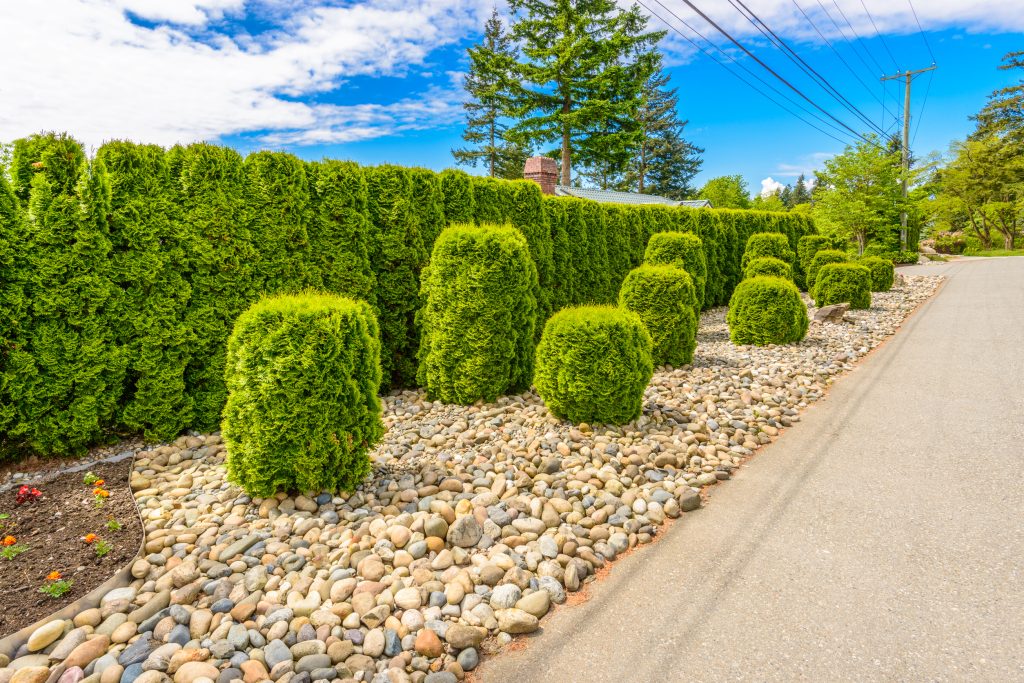
River rock used as a border material between a paved patio or walkway and a planting bed creates a clean visual transition and serves a practical purpose — it keeps mulch or soil from washing onto the hardscape surface.
A 6–12 inch band of river rock along the edge of a paver patio, flagstone walkway, or driveway is a finishing detail that most homeowners overlook but that professional landscapers almost always include. It protects the edges of the hardscape from soil contact, reduces edging maintenance, and adds texture contrast between the structured paved surface and the planting area.
5. Gravel Garden or Rock Garden
A gravel garden — sometimes called a rock garden or zen garden — uses river rock as the primary surface material, often combined with larger specimen stones, boulders, and carefully selected low-maintenance plants. This design approach originated in Japanese garden tradition but translates well to any residential setting where a distinctive, low-maintenance feature area is desired.
The combination of smooth river rock, larger stones, and drought-tolerant plants like sedum, lavender, ornamental grasses, and creeping thyme creates a high-interest area that genuinely requires very little upkeep once established. It’s also an effective solution for slopes and berms where grass is difficult to maintain.
Pair river rock with Mulch & More’s flagstone for stepping stones through a gravel garden design.
6. Poolside and Water Feature Surrounds
River rock is a natural choice around pools, ponds, and water features. Its smooth, rounded surface is comfortable underfoot, doesn’t absorb heat the way pavers can, and has the visual association with water that makes it feel intentional in aquatic settings.
Around a pool, river rock is typically used in the planting areas adjacent to the deck rather than on the deck surface itself. Around a backyard pond or fountain, it’s used to conceal the liner edge, create a naturalistic bank, and transition between the water feature and the surrounding landscape.
River rock is also commonly used at the base of downspouts and in rain garden applications adjacent to water features, where it manages splash and runoff while looking like a purposeful landscape element.
7. Erosion Control on Slopes
Slopes are one of the most persistent maintenance challenges in any yard. Grass on a steep slope is difficult to mow, erodes during heavy rain, and often thins out over time in shaded or compacted areas. Mulch washes downhill. River rock holds.
A slope covered with river rock set over erosion-control fabric is essentially maintenance-free. For steeper slopes, larger stone (3–5 inch river rock or even small boulders) is more stable. For gentler grades, 1–3 inch river rock provides sufficient weight and coverage to prevent soil movement without looking too heavy.
Combine with low-maintenance groundcovers planted through the fabric for a slope treatment that controls erosion, suppresses weeds, and looks intentional.
8. Firepit and Seating Area Surround
The area immediately around an outdoor fire pit is one of the most practical applications for river rock. It creates a non-combustible surface buffer around the fire feature, defines the seating area visually, handles foot traffic well, and looks better than bare soil or patchy grass that tends to develop in heavily used areas.
A 3–4 foot border of river rock around a fire pit, edged cleanly and set over compacted gravel base, creates a finished look that complements natural stone and paver patio surfaces without requiring mortared construction.
Planning Your River Rock Project
Before ordering, two things are worth getting right: the material size and the quantity.
Size: Smaller river rock (3/8″–3/4″ pea gravel range) works best for formal beds, tree circles, and tight spaces. Mid-size (1–3 inch) is the most versatile for general landscaping. Larger rock (3–5 inch) is better for drainage applications, erosion control, and dry creek beds where you want visual weight.
Quantity: River rock is ordered by the cubic yard or ton. Use the materials calculator at shopmulch.com to estimate how much you need based on your square footage and desired depth.
Same-Day and Next-Day Delivery Available
Mulch & More carries a full selection of river rock and decorative stone, available for delivery throughout Chester County, Delaware County, and Montgomery County — with same-day delivery available on many orders.
Shop river rock and decorative stone → Check delivery info → Contact us → | (610) 644-8086