White decorative stone is one of the most striking materials you can introduce into a landscape — and one of the most frequently misused. When it works, it creates a clean, high-contrast look that elevates a property’s curb appeal significantly. When it doesn’t, it looks out of place, gets dingy fast, or competes with everything around it.
The difference comes down to understanding what white stone is actually good at, where it belongs, and what to pair it with. Here’s a practical guide.
What Is White Decorative Stone?
White decorative stone is a broad category that includes several distinct materials, each with a slightly different look, texture, and best application.
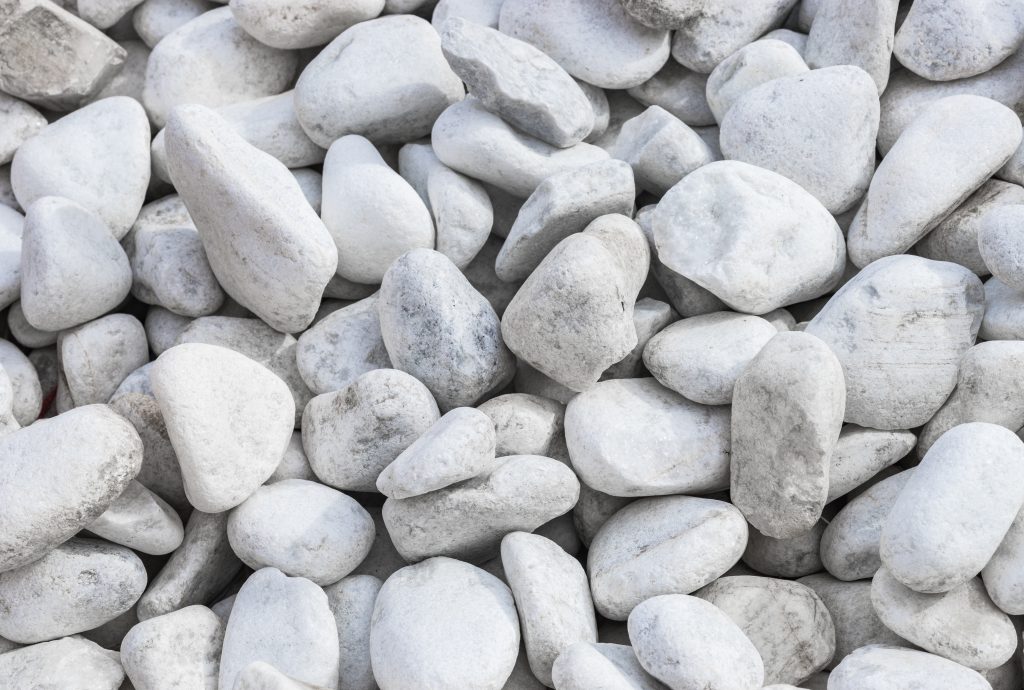
White Marble Chips The most popular white decorative stone for residential landscaping. Small, angular chips of crushed marble with a bright white color and slight luster. Works well in formal garden beds, foundation plantings, and entryway accents. Because the chips are angular, they stay in place better than smooth stones.
White River Rock / White Pebbles Smooth, rounded stones in white or off-white tones. More natural-looking than marble chips, with less brightness. Typically used in water features, Zen gardens, and naturalistic planting designs where a smooth texture is preferred.
White Limestone / White Quarry Stone Crushed white or light gray limestone, angular in texture. More of a functional material than a purely decorative one — often used in drainage applications, pathway bases, and utility areas where a light color and good drainage are both priorities.
Browse the current selection at Mulch & More’s decorative stone page.
Where White Decorative Stone Works Best
High-Contrast Foundation Beds
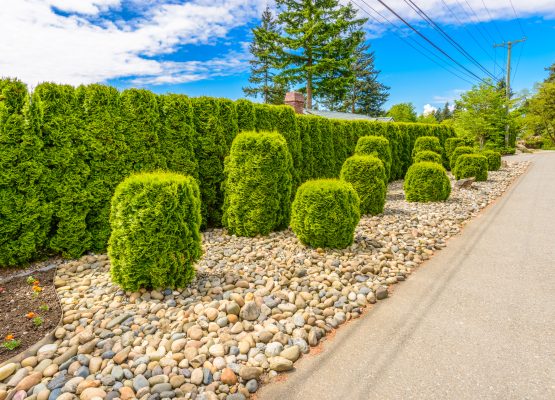
White stone against dark mulch-colored soil and green evergreen plantings creates a sharp, clean look that reads well from the street. This is the application where white decorative stone is most commonly seen — and most effective.
The key pairing: white or light-colored stone with deep green foliage plants (boxwood, holly, arborvitae, ornamental grasses). The contrast between the bright stone and the dark green makes both elements look more intentional and polished.
Avoid pairing white stone with plants that have light-colored foliage or variegated leaves — the contrast gets muddy and neither element stands out.
Formal Garden and Entry Designs
White stone has a natural affinity with formal, symmetrical landscape designs. Paired with clipped hedges, defined geometric bed shapes, and architectural plantings, it reinforces the structured character of the design. A formal entry bed flanking a front walkway with white marble chip ground cover and trimmed boxwoods is a classic combination that works reliably.
Zen and Minimalist Gardens
White river rock or white pebbles are a cornerstone of Japanese-inspired garden design. Raked or arranged around specimen plantings, boulders, or ornamental grasses, they create a calm, uncluttered surface that focuses attention on the plants and stones rather than the ground cover itself.
If this style appeals to you, pair Mulch & More’s decorative stone with a few larger pieces from the boulder selection for a clean, composed look.
Around Light-Colored Hardscape
White or light-colored stone works particularly well adjacent to light-colored hardscape — cream-toned pavers, white concrete, or natural limestone patio surfaces. The materials complement each other without competing. Conversely, white stone against dark pavers creates a high-contrast edge that can feel jarring depending on the overall design.
Water Features and Pond Surrounds
White pebbles and river rock around the edge of a pond or water feature create a naturalistic bank that conceals the liner, reflects light off the water surface, and looks intentional. In full sun, white stone around a water feature can also help the water appear brighter and more reflective — a particularly effective look for backyard ponds and fountains.
Where White Stone Doesn’t Work as Well
Being honest about the limitations saves a lot of regret:
High-traffic areas. White stone shows dirt, debris, and staining more than natural-colored stone. In areas with heavy foot traffic, pet activity, or where mulch or soil from adjacent areas might contaminate it, white stone will require more maintenance to stay looking clean.
Under certain trees. Deciduous trees drop leaves, seed pods, and organic debris throughout the season. This organic material is difficult to remove cleanly from white stone — it sits on the surface, decomposes, and gradually stains the stone over time. White stone works best under evergreens or in open, debris-free settings.
Informal or naturalistic landscapes. White stone’s brightness can look artificial in naturalistic garden designs that are meant to feel like an extension of the natural landscape. In those settings, natural-colored river rock, tan pea gravel, or mixed stone blends typically feel more appropriate.
Against red or orange brick. White stone against red brick creates a color clash that most landscape designers avoid. Natural tan, brown, or gray stone tones complement warm brick tones much more effectively.
Keeping White Decorative Stone Looking Its Best
White stone requires more attention than natural-toned decorative stone to stay looking sharp. Here’s what actually makes a difference:
Quality landscape fabric underneath. This is the single most important factor. Without a proper weed barrier, weeds grow through the stone and are difficult to remove without disturbing the surface. Weed roots also bring soil to the surface as they grow, which stains white stone quickly. Invest in quality woven fabric at installation.
Clean edging. Defined edging keeps adjacent soil and mulch from migrating into the white stone bed. Without it, the edges get muddy and the white stone’s crispness deteriorates quickly.
Occasional rinsing. A light rinse with a garden hose after heavy rain or wind events removes surface dust and debris before it has a chance to settle and stain.
Leaf removal in fall. Remove fallen leaves before they break down on the stone surface. A leaf blower works better than a rake for this — raking displaces the stone.
How Much White Decorative Stone Do You Need?
Use the same cubic yard formula as any decorative stone: Length × Width × Depth (in feet) ÷ 27. For most bed applications, 2–3 inches of depth is standard.
The Mulch & More materials calculator on the website handles both cubic yard and tonnage calculations — plug in your dimensions and it gives you the number to order.
When ordering white stone, round up slightly more than you would with natural-toned stone. Because white stone is more visible at varying depths, thin spots are more apparent. A consistent, full coverage depth matters more aesthetically with white stone than with darker materials.
Order White Decorative Stone With Fast Local Delivery
Mulch & More carries white marble chips, white river rock, and other decorative stone options available for delivery throughout Chester County, Delaware County, and Montgomery County. Same-day and next-day delivery available on most orders.
Shop decorative stone → View all products → Delivery information → Contact us → | (610) 644-8086