Buying properly seasoned firewood is the first step. Keeping it that way is the second — and it’s the step most people get wrong. Wood that arrives dry and ready to burn can reabsorb moisture surprisingly quickly if it’s stacked on wet ground, left fully exposed to rain and snow, or piled too tightly for air to circulate. A little attention to storage protects the investment you’ve already made in quality, seasoned wood.
Get It Off the Ground
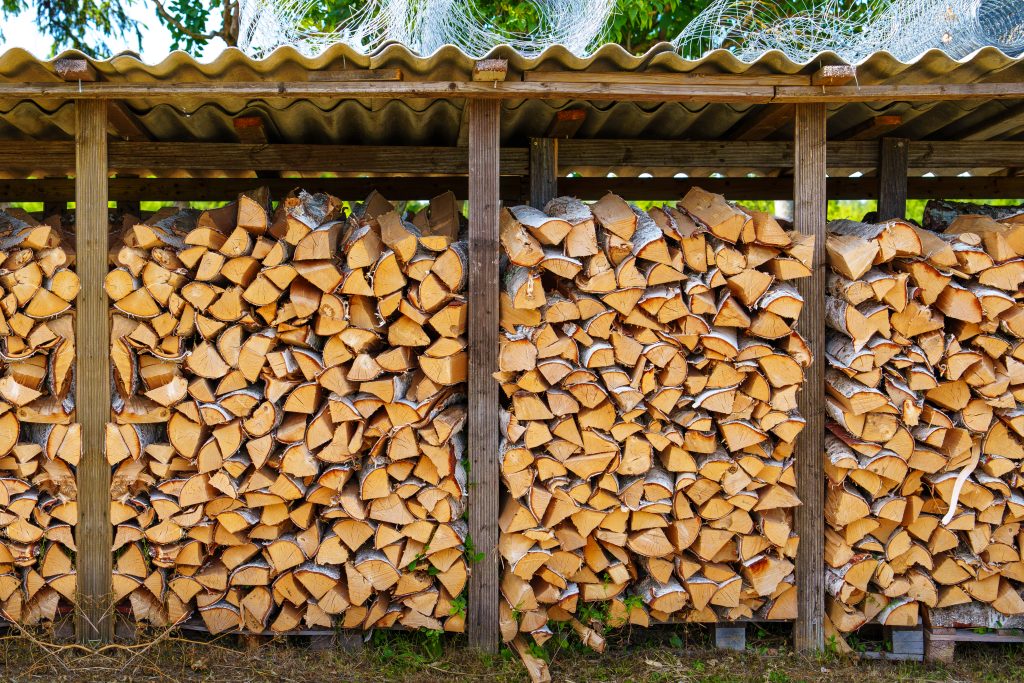
The single most important storage decision is keeping firewood off direct contact with soil or grass. Ground contact traps moisture against the bottom layer of wood, invites rot, and gives insects easy access to your pile. A simple base — pallets, pressure-treated lumber rails, or a purpose-built firewood rack — raises the stack a few inches off the ground and makes a meaningful difference in how long the bottom rows stay usable.
Cover the Top, Not the Sides
This is the mistake most people make: wrapping a full tarp completely around a wood pile, sides included. Doing that traps moisture and humidity inside the stack, which can actually slow seasoning and encourage mold rather than protect the wood. The better approach is covering only the top of the pile — enough to shed rain and snow — while leaving the sides open so air can move freely through the stack and carry moisture away.
Stack for Airflow
How you stack matters almost as much as where. A few practices that help:
- Leave gaps between rows rather than packing logs in tightly, so air can move through the pile rather than just around the outside of it.
- Orient split faces outward at the ends of a row for a more stable stack that’s less likely to topple.
- Avoid pushing the pile directly against a house or fence wall — a few inches of clearance allows airflow on that side too and reduces the chance of pest issues near your home.
Location Matters
Where you place your wood pile affects how well it dries and stays dry:
- Full sun and wind exposure speeds up seasoning and drying between rain events, which is ideal if your wood is still finishing its seasoning process after delivery.
- Some distance from your house is generally recommended, since wood piles can attract insects, and keeping the stack a reasonable distance from siding or a foundation reduces the chance of them finding their way indoors.
- A spot with reasonable drainage avoids standing water pooling around your base structure after heavy rain.
Rotate Your Stock
If you’re restocking firewood throughout the season rather than buying everything at once, use older wood first and stack newer deliveries behind or beside it. This first-in, first-out approach keeps your oldest — and typically driest — wood in rotation, rather than letting it sit untouched at the back of the pile while newer wood gets burned first.
How Much to Keep On Hand vs. Under Cover
For homeowners burning through a full winter, it’s common to keep a smaller, easily accessible supply near the house — a few days’ worth stacked on a porch or in a covered box — while the bulk of the cord stays in a larger outdoor stack further from the home. This cuts down on how often you need to make trips to the main pile in bad weather while still keeping the majority of your wood properly ventilated.
Getting the Right Amount Delivered
Storage planning starts with knowing how much wood you’re actually storing. Our guide to cords, face cords, and ricks can help you figure out roughly how much space a season’s supply will take up before it’s delivered, and our post on seasoned vs. green firewood explains why proper storage matters even more for wood that’s still finishing its seasoning process.
Order Ahead of the Season
The earlier your firewood is delivered and stacked correctly, the more time it has to finish drying before you need it. Our seasonal buying guide for Chester County homeowners covers the best timing for placing an order.
Ready to order? Browse our mixed hardwood firewood or contact us at (610) 644-8086 to schedule delivery before the weather turns.