Why Mulch Delivery Makes Sense
When it comes to refreshing your landscape, mulch plays a starring role. But lugging home dozens of heavy bags from the store? Not so appealing. That’s where mulch delivery comes in.
Whether you’re a homeowner looking to tidy up your flower beds or a contractor managing a large project, delivery saves time, energy, and money. In this guide, we’ll break down everything you need to know about mulch delivery. How it works, how much you need, costs to expect, prep tips, and how to avoid common pitfalls.
How Mulch Delivery Works
Mulch delivery is a straightforward service offered by many garden centers, landscape suppliers, and local businesses. Here’s how the process typically goes:
- Browse & Select: Choose your mulch type online or in-store—organic options like pine bark mulch or dyed hardwood, or specialty picks like playground rubber mulch or pet-friendly blends. Some suppliers offer sample bags or material previews online.
- Calculate Quantity: Use a mulch calculator or ask for help determining how many cubic yards you need. This step is crucial to avoid overpaying or running short.
- Schedule Delivery: Pick a delivery window that works for you. Weekdays tend to offer more flexible time slots, while spring and early summer may book out fast.
- Prepare Drop Site: Clear space in your driveway or curbside where the mulch can be safely dumped. A tarp can help protect your driveway or grass.
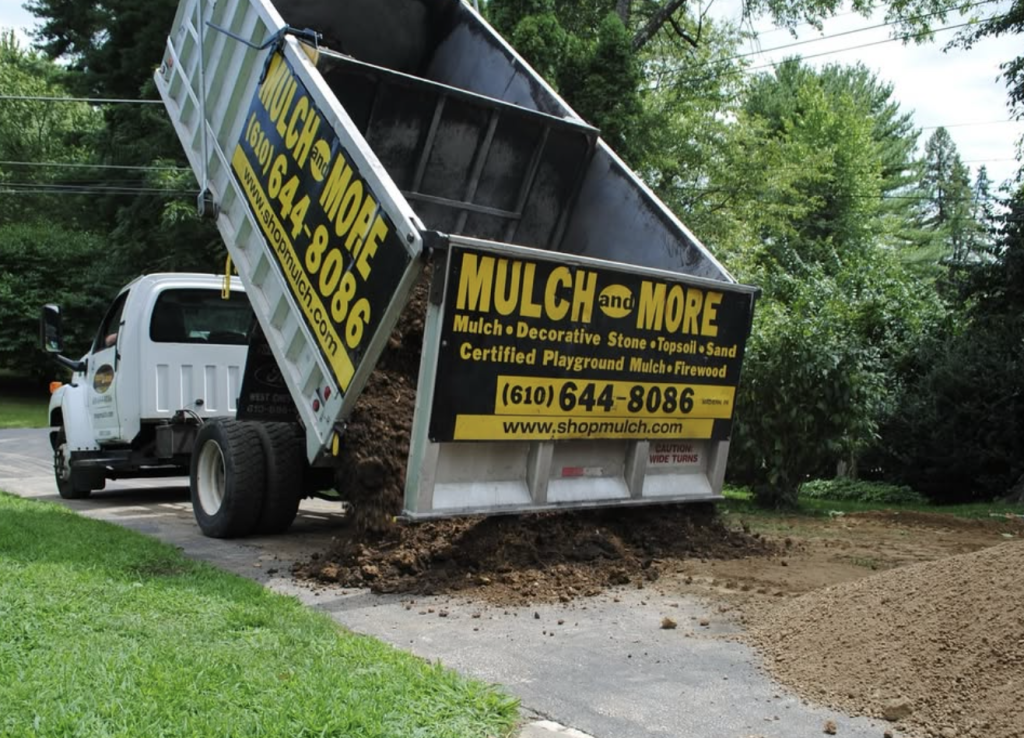
Delivery Day: The truck arrives and unloads the mulch into one pile. From there, it’s ready to be spread throughout your property. Make sure to coordinate timing if you’re hiring a team to spread it.
How Much Mulch Should You Order?
Ordering the right amount is key to avoiding costly overages or frustrating shortfalls.
Step-by-Step Calculation:
- Measure length x width in feet to get square footage.
- Convert desired mulch depth to feet (e.g., 3 inches = 0.25 feet).
- Multiply square footage by depth in feet.
- Divide by 27 to convert to cubic yards.
Example: A 20 ft x 10 ft garden bed, 3 inches deep: 200 sq ft x 0.25 = 50 50 ÷ 27 = 1.85 cubic yards
Coverage Estimates:
- 1 cubic yard at 2” deep covers ~162 sq ft
- 1 cubic yard at 3” deep covers ~108 sq ft
- 1 cubic yard at 4” deep covers ~81 sq ft
Pro Tip: Always round up to the next full yard. Extra mulch can be used to top off thin areas or stored for later. If you’re spreading mulch with a team, rounding up ensures no last-minute shortages mid-project.
Types of Mulch Available for Delivery
Mulch and More offers a range of bulk and specialty mulches that can be delivered directly to your home or job site. Here’s a breakdown of options and what each is best for:
- Shredded Hardwood Bark – Ideal for trees, foundation plantings, and flower beds. It breaks down over time to improve soil quality.
- Pine Bark Mulch – Longer-lasting and better for acid-loving plants like azaleas and rhododendrons. It also provides good drainage.
- Dyed Mulch (Black, Brown, Red) – Popular for its rich color and uniform appearance. Great for front yards and curb appeal.
- Playground Rubber Mulch – Designed for safety and shock absorption. Used in schools, parks, and home play areas.
- Pet-Safe Mulch – Non-toxic blends like untreated pine or cedar. A smart choice for dog runs or backyards.
- Compost or Leaf Mulch – Excellent for garden beds. It feeds the soil and improves moisture retention.
- Grass Seed Mulch Cover – Often used to protect seed from erosion and boost germination.
Budget-Friendly Mulch – Ask about our cheapest mulch blends and seasonal overstock options. These are ideal for large areas or community projects.
How Much Does Mulch Delivery Cost?
The total cost of mulch delivery depends on mulch type, quantity, distance, and any extras like installation. Here’s what to consider:
- Material Costs:
- Shredded hardwood: $30–$45 per cubic yard
- Pine bark mulch: $40–$55 per cubic yard
- Dyed mulch: $35–$60 per cubic yard
- Rubber mulch: $90–$150 per cubic yard
- Delivery Fees: Most suppliers charge a flat rate ($25–$75), but some use a per-mile system. Mulch and More offers free delivery within a 10-mile radius.
- Minimum Order Requirements: Usually 1–2 cubic yards minimum.
- Spreading Services: Some providers offer mulch installation for an added fee, usually $35–$75 per yard.
- Bulk Discounts: Large orders (10+ cubic yards) may receive discounted rates per yard. Ideal for commercial properties or HOA projects.
Tip: Call ahead to ask about specials, coupons, or neighborhood delivery days. Grouping deliveries in the same area can reduce fuel surcharges.
Preparing for Your Mulch Delivery
Proper prep helps avoid delays or messy drop-offs:
- Pick a Drop Zone: Driveways, parking pads, or compacted gravel are best. If you need to use grass, protect it with a tarp.
- Mark the Spot: Use cones, buckets, or spray paint. Add a sign if you won’t be home.
- Clear the Area: Remove cars, trash cans, toys, or anything else that may block the path.
- Notify Neighbors: Especially if delivery could block part of the street.
- Plan for Spreading: Have your tools ready—wheelbarrows, mulch forks, rakes, and gloves.
Common Mulch Delivery Mistakes (and How to Avoid Them)
- Ordering Too Little: Always round up.
- Choosing the Wrong Mulch: Match mulch to your use (e.g. pine bark for acid-loving plants, rubber mulch for playgrounds).
- Ignoring Access Limits: Narrow driveways or soft lawns may be inaccessible to trucks.
- Last-Minute Bookings: Peak season fills quickly. Book early.
- Weather Missteps: Avoid delivery before storms or wind.
- No Tarp: Protect surfaces from stains, especially with dyed mulch.
After Delivery: Spreading Your Mulch
Once your mulch is delivered, aim to spread it within 24–48 hours to prevent compaction, mold, or sun bleaching.
Best Practices:
- Depth: 2–3 inches for general beds, 3–4 inches for trees and weed control.
- Technique: Spread evenly and keep mulch a few inches from plant stems or tree trunks.
- Mulching Kits: If you’re using a mower mulching kit, ensure grass clippings stay on the lawn but not in mulched areas.
- Watering: Lightly watering helps mulch settle and activates color in dyed blends.
Why Choose Mulch and More for Delivery?
- Local expertise and fast response times
- Transparent pricing and no hidden fees
- Easy online ordering and phone support
- Custom mulch blends and pet-safe options
- Priority scheduling for HOA and commercial clients
Whether you’re ordering 2 yards for your backyard or 20 for a full property overhaul, we help you mulch smarter—not harder.
Mulch Delivery vs. Bagged Mulch: Which Is Better?
When planning a landscaping project, many homeowners ask: Should I get bulk mulch delivered or stick with bagged mulch from the local home improvement store? Here’s a side-by-side comparison to help you decide—and why mulch delivery is often the better option.
Cost Comparison: Bagged mulch typically comes in 2 cubic foot bags and costs between $3 and $6 per bag. That means it takes 13.5 bags to equal 1 cubic yard—and even at $4 per bag, that’s $54 per yard.
By contrast, bulk mulch delivery averages $30–$60 per cubic yard for organic options, making it significantly more affordable if you need more than 1 yard.
Time & Labor Savings:
- Bagged mulch requires multiple car trips, unloading, and heavy lifting. You’re dealing with dozens of bags.
- With bulk mulch delivery, your entire order is dropped at once, ready for spreading. This saves time and energy.
Environmental Impact:
- Bagged mulch uses plastic packaging, much of which ends up in landfills.
- Bulk mulch eliminates single-use plastic and reduces your carbon footprint by minimizing trips.
Product Variety:
- Bagged mulch is often limited to black, brown, or red dyed mulch.
- Delivery services offer more: pine bark mulch, shredded hardwood, compost blends, pet-safe mulch, and playground rubber mulch, all in bulk quantities.
Storage & Flexibility:
- Bagged mulch can sit in your garage until you need it, which is helpful for small projects.
- Bulk mulch is best when you’re ready to spread it right away. However, it can be covered and stored temporarily with a tarp.
Final Verdict: If you need less than 1 cubic yard, bagged mulch may be convenient. But for larger projects, mulch delivery is cheaper, faster, and more eco-friendly. It also gives you more control over mulch type, depth, and color.
Tools & Equipment to Make Mulch Delivery Even Easier
Once your mulch is delivered, having the right tools on hand makes all the difference in how efficiently you can get the job done. Whether you’re a seasoned landscaper or a first-time DIYer, investing in the right mulching equipment can save you hours of labor.
Essential Tools for Spreading Mulch:
- Wheelbarrow: Ideal for transporting mulch across your yard without excessive strain. Look for dual-wheel models for stability.
- Mulch Fork or Shovel: A mulch fork with wide tines moves material faster than a standard shovel. Great for bark, chips, and compost mulch.
- Rake: Use a hard rake or landscape rake to level mulch evenly across flower beds and tree bases.
- Tarp: Helps keep driveways and lawns clean when receiving bulk mulch. You can also use a tarp to drag mulch to hard-to-reach areas.
Advanced Mulching Equipment:
- Chipper/Shredder: Useful for turning yard waste into homemade mulch. It’s ideal if you want to recycle prunings and branches.
- Best Mulcher Attachment: Some landscapers use a low-flow mulching head with compact tractors or skid steers for heavy-duty coverage on large properties.
- Mower Mulching Kit: For lawns, a mower with a built-in mulching kit recycles grass clippings into your turf to promote healthy growth and reduce yard waste.
If you’re looking to upgrade your mulch routine, Mulch and More can help recommend the best tools and kits to match your yard size and mulch type.
Make Mulch Delivery Work for You
Mulch delivery is a convenient, cost-effective way to refresh your yard. It reduces hassle, improves consistency, and supports healthy landscapes with minimal effort. From picking your product to planning your drop zone, a little preparation goes a long way.
Mulch and More is proud to offer top-tier mulch and reliable delivery tailored to your schedule and project size.
Ready to get started? Reach out today and let’s get your delivery on the calendar.
FAQ: Mulch Delivery
- How much mulch can be delivered at once?
Most trucks carry 10–14 cubic yards. For larger projects, multiple deliveries may be scheduled.
- What is the best mulch for delivery?
Shredded hardwood and dyed mulch are the most popular. Pine bark is great for long-term coverage and soil improvement.
- How much does mulch delivery cost?
Expect $30–$60 per yard for materials plus a $25–$75 delivery fee. Bulk orders often come with discounts.
- Can I schedule mulch delivery on weekends?
Yes, but slots fill fast during spring. Book early to secure preferred times.
- What equipment do I need to spread mulch after delivery?
A wheelbarrow, shovel or mulch fork, rake, gloves, and a tarp if needed.
- Can mulch be dumped on my lawn?
Yes—but use a tarp to prevent damage or stains, especially if mulch will sit for more than 24 hours.
- What if it rains after my delivery?
Cover with a tarp or spread quickly. Wet mulch can be heavier and harder to move, but won’t be ruined.
- Is bulk mulch cheaper than bagged mulch?
Absolutely. Bulk is more economical per yard and better for the environment with less plastic waste.