Every few winters, a heavy snow or an ice storm takes down power lines across Chester County, and the outage lasts longer than anyone expected. When the furnace blower goes quiet and the house starts losing heat, a stack of dry firewood stops being a cozy extra and becomes a genuinely useful piece of preparedness. If you own a fireplace or wood stove, keeping a reserve supply of seasoned firewood is one of the simplest ways to be ready before the next storm arrives.
Why Chester County Homeowners Keep Emergency Firewood on Hand
Winter weather in southeastern Pennsylvania is unpredictable. A season might bring a handful of mild snowfalls, then one ice storm that leaves neighborhoods without power for days. Because tree-lined streets and overhead utility lines are common across the Main Line and surrounding townships, outages after heavy ice or wet snow are a recurring reality rather than a rare event.
Firewood works as a backup because it doesn’t depend on the grid, a delivery truck, or a store being open. If you already own a wood-burning fireplace, insert, or stove, the only thing standing between you and a usable heat source is having enough dry wood stacked and ready.
How Much Firewood Do You Need for a Multi-Day Outage?
There’s no single number that fits every house, because the answer depends on your heating appliance, your home’s insulation, and how cold it gets. A few general principles help:
- A wood stove or efficient insert produces far more usable heat per log than an open masonry fireplace, so the same amount of wood goes much further.
- An open fireplace is better at ambiance than heating, and much of its heat escapes up the chimney. It can take the edge off a single room but rarely heats a whole house.
- Smaller, well-insulated homes need less wood than large, older homes with drafty windows.
- Burning around the clock during a cold snap uses wood quickly, so a reserve sized for occasional evening fires may not be enough for a four-day outage.
As a baseline, many households feel comfortable with at least a face cord or a partial cord set aside specifically as an emergency reserve, separate from the wood they burn during normal use. If a stove is your main backup heat, a full cord is a more realistic cushion. Our guide on how much is a cord of firewood explains the difference between a full cord, a face cord, and a rick so you can size your order correctly.
Choosing Seasoned Firewood for Backup Heat
An emergency is the worst time to discover your wood is too wet to burn well. Green or under-seasoned wood is hard to light, produces heavy smoke, and delivers less heat, which is exactly the opposite of what you need when the house is cold. Properly seasoned wood catches faster, burns hotter, and creates less creosote in your chimney.
Our post on seasoned vs. green firewood covers how to tell the difference by sight, weight, and sound. For an emergency reserve, it’s worth choosing wood you know is dry rather than hoping a wet pile will dry out in time. Our mixed hardwood firewood blend of ash, oak, maple, and poplar gives you quick-starting pieces alongside denser, longer-burning logs, which is a practical combination when you need a fire that lights easily and then lasts.
Fireplace and Wood Stove Safety During an Outage
Heating with fire during a power outage is only a good plan if it’s done safely. A few essentials:
- Have your chimney inspected and cleaned before winter. Creosote buildup is a real fire risk, and an inspection is far easier to schedule in fall than during a storm.
- Install carbon monoxide detectors on every level of the house, and make sure they have working batteries. Power outages are exactly when detectors matter most.
- Never use outdoor heating or cooking equipment indoors. Grills, camp stoves, and propane heaters not rated for indoor use can release carbon monoxide.
- Keep the damper open while a fire is burning, and use a screen or stove door to contain sparks.
- Keep combustibles away from the hearth, and have a fire extinguisher accessible.
- Dispose of ashes in a metal container kept away from the house, since embers can stay hot for days.
If you’re unsure whether your fireplace or flue is in good condition, have a qualified chimney professional check it before relying on it as a heat source.
Firewood Storage for Emergency Readiness
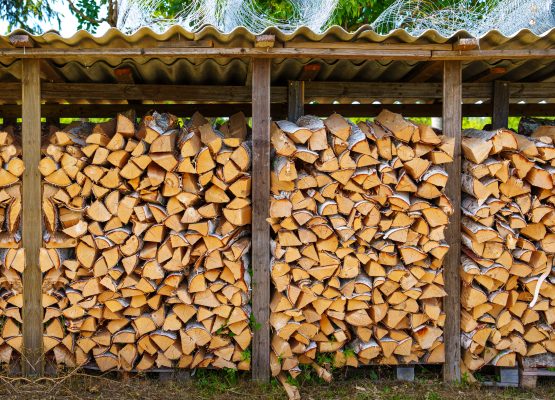
An emergency reserve only helps if it stays dry. Wood stacked directly on the ground or fully wrapped in a tarp can absorb moisture and lose the seasoning you paid for. Keep the pile off the ground, covered on top, and open on the sides for airflow. If your woodpile is a long walk from the house, also keep a few days’ supply in a covered spot near the door so you aren’t trudging through snow to reach it.
We cover stacking and covering methods in detail in our guide to firewood storage tips, including how to rotate older wood into use first so your reserve stays fresh.
Build Your Backup Heat Plan Before Winter
A reliable backup plan has a few parts: a clean, inspected chimney; working carbon monoxide detectors; a dry, covered reserve of seasoned wood; and a way to light a fire without hunting for supplies in the dark. If you’d rather not scramble for wood after the forecast turns, order ahead. Our seasonal firewood buying guide explains why late summer and early fall are the best times to stock up, when delivery schedules are open and your wood has time to finish drying.
Order Firewood Delivery Before the Next Storm
Demand for firewood spikes the moment a big storm appears in the forecast, and delivery windows fill quickly. Ordering early takes the pressure off. You can read about how ordering works in our overview of firewood delivery near me, then browse our firewood and schedule a delivery to your driveway. Questions about quantity or timing? Contact us or call (610) 644-8086 and we’ll help you figure out how much to keep on hand for your home.