Ask three firewood sellers what a cord costs and you may get three very different answers. That’s not always because one is cheaper or more expensive. It’s often because they’re selling different things under the same name. Wood species, moisture content, the size of the load, and whether delivery and stacking are included can all change the price. Understanding what’s behind the number helps you compare offers accurately and avoid paying less for a lot less wood.
What Determines the Price of a Cord of Firewood
Several factors work together to set the price you see:
- How the wood is measured, since a full cord, a face cord, and a pickup-truck load are very different volumes.
- How dry the wood is, because seasoning takes time, storage space, and effort.
- Which species are in the load, since denser hardwoods generally cost more than lighter woods.
- How it’s processed, including how it’s cut, split, and sorted.
- Whether delivery is included, and how far the truck has to travel.
- Whether stacking is part of the service, which adds labor.
- Time of year, because demand rises sharply when the weather turns cold.
None of these is a trick. They’re simply the real costs behind getting dry, ready-to-burn wood to your property.
Full Cord vs. Face Cord: Compare the Same Unit
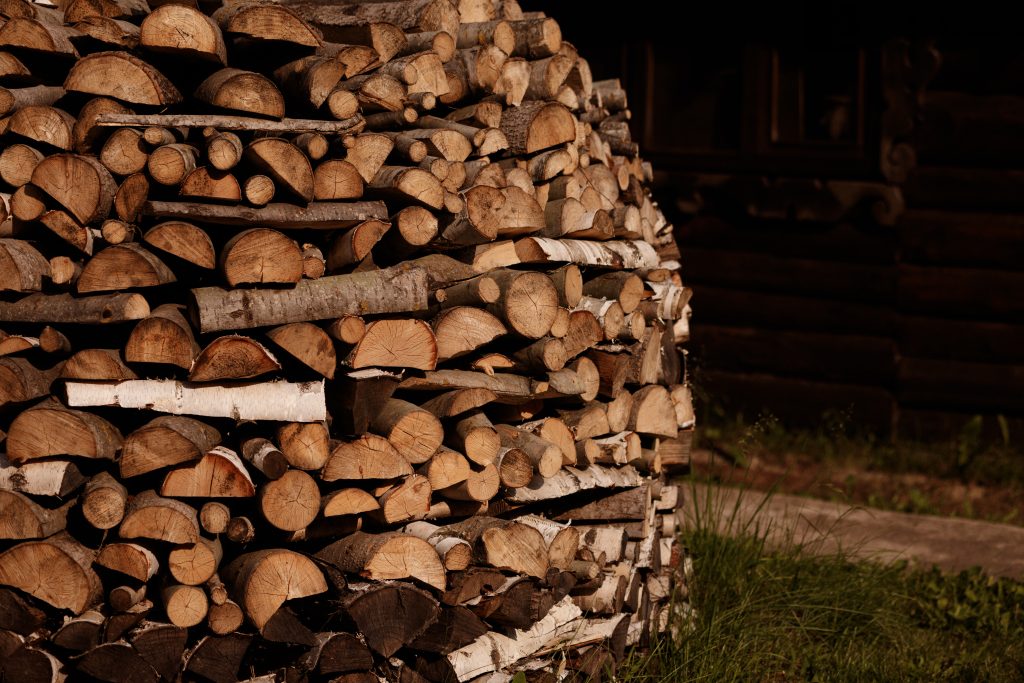
The single biggest source of confusion in firewood pricing is measurement. A full cord is a stack 4 feet high, 4 feet deep, and 8 feet long, or 128 cubic feet. A face cord has the same height and length but only the depth of a single piece of wood, so it’s a fraction of a full cord’s volume.
If one seller’s price looks dramatically lower than another’s, check whether it’s for a full cord or a face cord before deciding it’s a bargain. Always ask for the unit by name and compare price per full cord. Our guide on how much is a cord of firewood explains cords, face cords, and ricks in detail so you can compare quotes on equal footing.
Seasoned vs. Green Wood: Why Dry Wood Costs More
Green wood is cheaper to produce because it’s sold shortly after being cut and split. Seasoned wood has been dried for months, which means the seller has spent time and storage space getting it ready. That extra effort is reflected in the price, but it also delivers real value. Dry wood lights faster, burns hotter, produces less smoke, and leaves less creosote in your chimney.
Buying cheap green wood can end up costing you more in frustration and lower heat output, and you may still have to let it dry for a season before it burns well. Our post on seasoned vs. green firewood explains why moisture content matters so much and how to check it yourself.
How Wood Species Affect Firewood Cost
Dense hardwoods such as oak burn long and hot, and they typically carry a higher price than lighter woods because they hold more energy per cubic foot. Softer woods burn faster and cooler. A mixed hardwood blend gives you a balance: easier-lighting pieces alongside longer-burning logs, usually at a more practical price than a single premium species. We cover how that balance works in our post on mixed hardwood firewood.
Delivery, Stacking, and Pickup: What’s Included?
The delivered price of firewood often includes more than the wood itself. When you compare quotes, ask what each one covers:
- Is delivery included, or billed separately based on distance?
- Is the wood dumped in a pile or stacked where you want it?
- Is there a minimum order for delivery?
- Can you pick up smaller amounts yourself to save on delivery?
A lower sticker price that excludes delivery and stacking may end up costing more than a higher price that includes everything. Our overview of firewood delivery near me explains how delivery works when you order from us, including how to prepare a drop zone.
Seasonal Price Patterns
Firewood is a seasonal product, and pricing and availability follow the weather. Demand builds through late summer and fall, peaks when the first cold snaps arrive, and stays high through winter. Ordering early gives you the widest selection of delivery windows and avoids the rush that comes with the first freeze. We cover the best timing in our seasonal firewood buying guide for Chester County homeowners.
Red Flags When Shopping for Cheap Firewood
A low price isn’t automatically a bad deal, but a few warning signs deserve a closer look:
- A vague unit of measurement, such as “a load” or “a rick” with no stated dimensions.
- No answer about moisture or seasoning when you ask how long the wood has dried.
- Wood that looks freshly cut, with bright, wet-looking ends and heavy weight.
- Mixed pieces with rot, mold, or heavy insect damage, which burn poorly.
- Pressure to buy immediately without explaining what’s included.
Reputable suppliers are happy to explain exactly what you’re buying, how it was dried, and how it’s measured.
How to Compare Firewood Quotes Fairly
When you’re collecting prices, ask each seller the same questions so the numbers line up:
- What unit is the price for, and what are its dimensions?
- Is the wood seasoned, and for how long?
- What species are included?
- Is delivery included, and is stacking available?
- When can it be delivered?
Write the answers side by side, and the better value usually becomes clear.
Get a Firewood Quote From Mulch and More
If you’re ready to price out your season’s wood, browse our firewood or contact us at (610) 644-8086. We’ll walk you through quantities, delivery, and timing so you know exactly what you’re getting.